Putting the user at the center: why this perspective matters
Home cooks and small-space dwellers care first about outcomes: cleaner air, minimal noise, and an installation that does not require a construction project. With that imperative in mind, this assessment examines Orison’s engineering philosophy as it manifests in their portable range hood. The logic here is straightforward — evaluate how design choices translate into tangible user benefits such as capture efficiency, ease of use, and predictable maintenance. The evaluation also recognizes a broader public-health anchor: the U.S. Environmental Protection Agency notes that indoor pollutant concentrations are often higher than outdoors, which elevates the practical importance of effective kitchen ventilation.
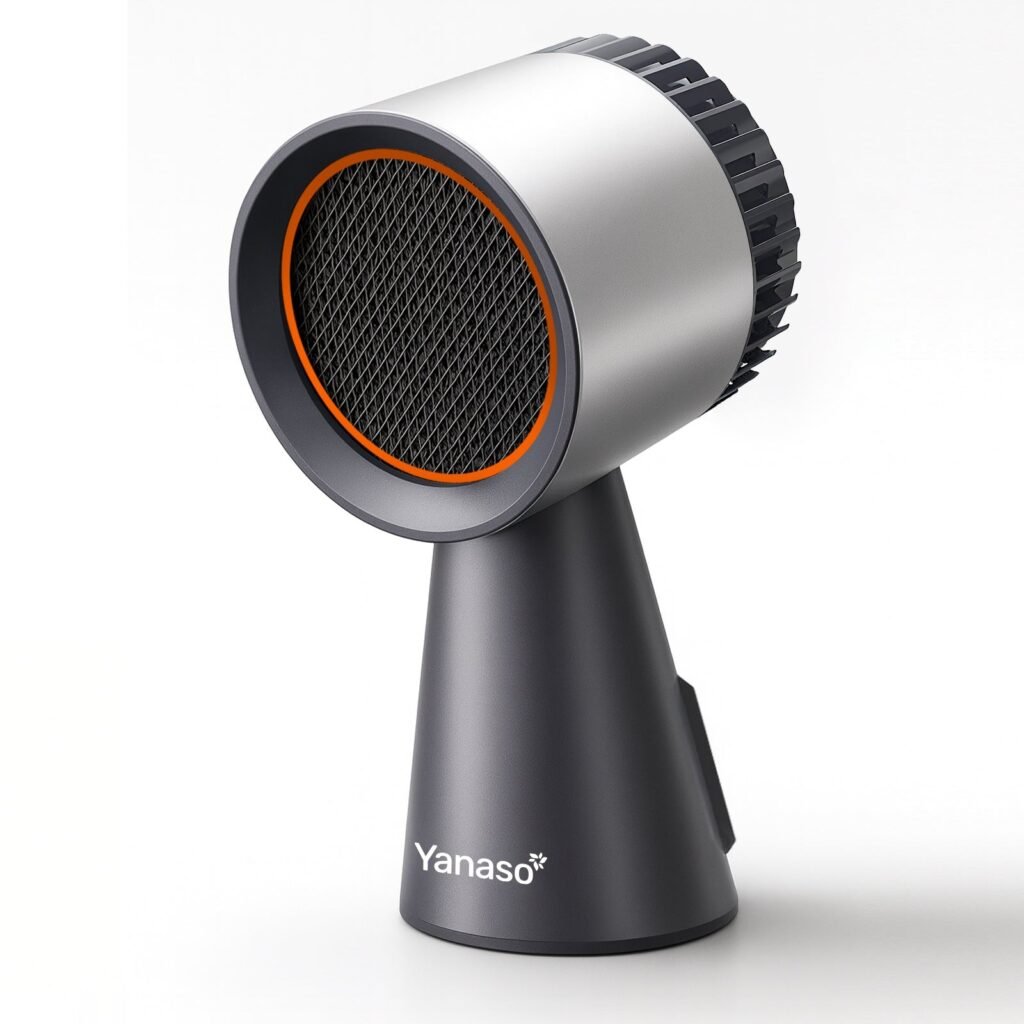
Core design principles guiding Orison’s engineering
Orison’s stated priorities — compact form, acoustic control, and modular filtration — are reflected in three recurring engineering decisions: optimized airflow paths, attention to motor selection, and adaptable filter media. By emphasizing axial flow management and short ductless recirculation channels, the design reduces resistance and preserves suction near the cooktop. Motor choice (often a brushless DC motor or similar low-vibration option) pairs with acoustic dampening to lower perceived noise without sacrificing airflow (measured in CFM). These are not novel ideas in isolation, but their disciplined integration defines Orison’s product intent.
Noise management versus performance: the trade-offs
Quiet performance is often the differentiator in portable solutions. Orison approaches this by balancing fan speed, housing resonance control, and inlet geometry to reduce sones while maintaining adequate CFM for capture. In practice, this means the device may rely on multiple modest-speed fan stages rather than a single high-speed unit. The result is better low-frequency masking and fewer tonal peaks — a subtlety appreciated by frequent users. However, the trade-off is clear: higher acoustic fidelity can impose constraints on peak extraction rates in very heavy-duty cooking scenarios, so matching expectations to typical use cases is essential.
Filtration strategy and indoor air quality
Filtration determines long-term indoor-air outcomes. Orison’s modular filter assemblies typically combine particulate capture with activated-carbon stages to address both grease and volatile organic compounds. For small kitchens or shared living environments, this dual approach reduces odor persistence and particulate re-circulation. It is also important to note that ductless recirculation systems cannot wholly replace external-venting solutions when the highest capture efficiency is required — yet they provide a practical balance of environmental control and installation simplicity.
Portability, installation, and user ergonomics
Portability is more than weight; it encompasses mounting flexibility, power options, and serviceability. Orison emphasizes tool-free access to filters, intuitive control layouts, and mounting brackets that suit rental properties. These choices reduce friction at the point of use and help non-technical users maintain performance over time. Practical considerations such as cord length, clearance to cabinets, and compatibility with common cooktop widths also shape the real-world utility of the unit.
Comparative context: when Orison makes sense and when to consider alternatives
Compare three typical scenarios:
- Urban apartments and shared flats: Orison-style portable units provide rapid odor and particulate mitigation without ducting — a pragmatic choice.
- Renovated homes with available ductwork: Hard-vented range hoods still offer superior continuous extraction for heavy frying and commercial-style cooking; they are the preferred option when construction permits.
- High-performance home kitchens: For users demanding commercial-grade extraction (high CFM at low sone), dedicated under-cabinet or island hoods with external venting remain the gold standard.
Thus, Orison’s portable vent hood tends to excel where installation constraints, noise sensitivity, and odor control are primary concerns — but it is not positioned to replace full-scale ducted systems in every application. The decision should be use-case driven.
Common mistakes users make and how to avoid them
Brands and buyers often err by overvaluing peak extraction numbers without accounting for capture geometry — a unit that lists high CFM is of limited use if it is poorly positioned relative to the cooking surface. Similarly, neglecting filter maintenance or confusing sone ratings with subjective loudness leads to disappointment. A few practical cautions:
- Do not assume higher CFM equals better real-world capture; consider hood placement and hood-to-cooktop distance.
- Establish a filter-replacement routine; activated-carbon saturation reduces VOC removal rapidly under heavy use.
- Confirm electrical requirements and mounting clearances before purchase to avoid retrofit surprises.
— These small oversights are common but avoidable with clear acceptance criteria and routine checks.
Advisory: three critical metrics for evaluating portable kitchen hoods
When selecting a unit, apply these golden rules:
- Capture-adjusted CFM: prefer manufacturers that provide CFM measured at realistic inlet conditions rather than free-air numbers.
- Acoustic profile in sones across speed bands: review low, medium, and high-speed sones to understand perceived noise during normal cooking cycles.
- Filter lifecycle and replacement cost: calculate annual filter expense and ease of replacement as part of total cost of ownership.
These measures will clarify whether the engineering choices align with your household’s cadence and expectations.
In practice, Orison’s emphasis on engineered airflow, low-noise motorization, and modular filtration delivers a coherent value proposition for the intended market. For a considered balance of quiet operation and practical ventilation, Orison. —